If you drive gravel roads, a cracked windshield is less a question of “if” than “when.” On most personal auto policies, glass damage from a thrown rock is paid under comprehensive coverage, minus your comprehensive deductible, unless your policy includes no-deductible glass coverage or your state requires insurers to waive it. If you carry liability only, your own policy generally won’t pay for the glass at all.
Below, we walk through how glass claims actually work for people who live at the end of a county road, what changes from state to state, and how to decide whether filing makes sense.
Why gravel roads and glass don’t get along
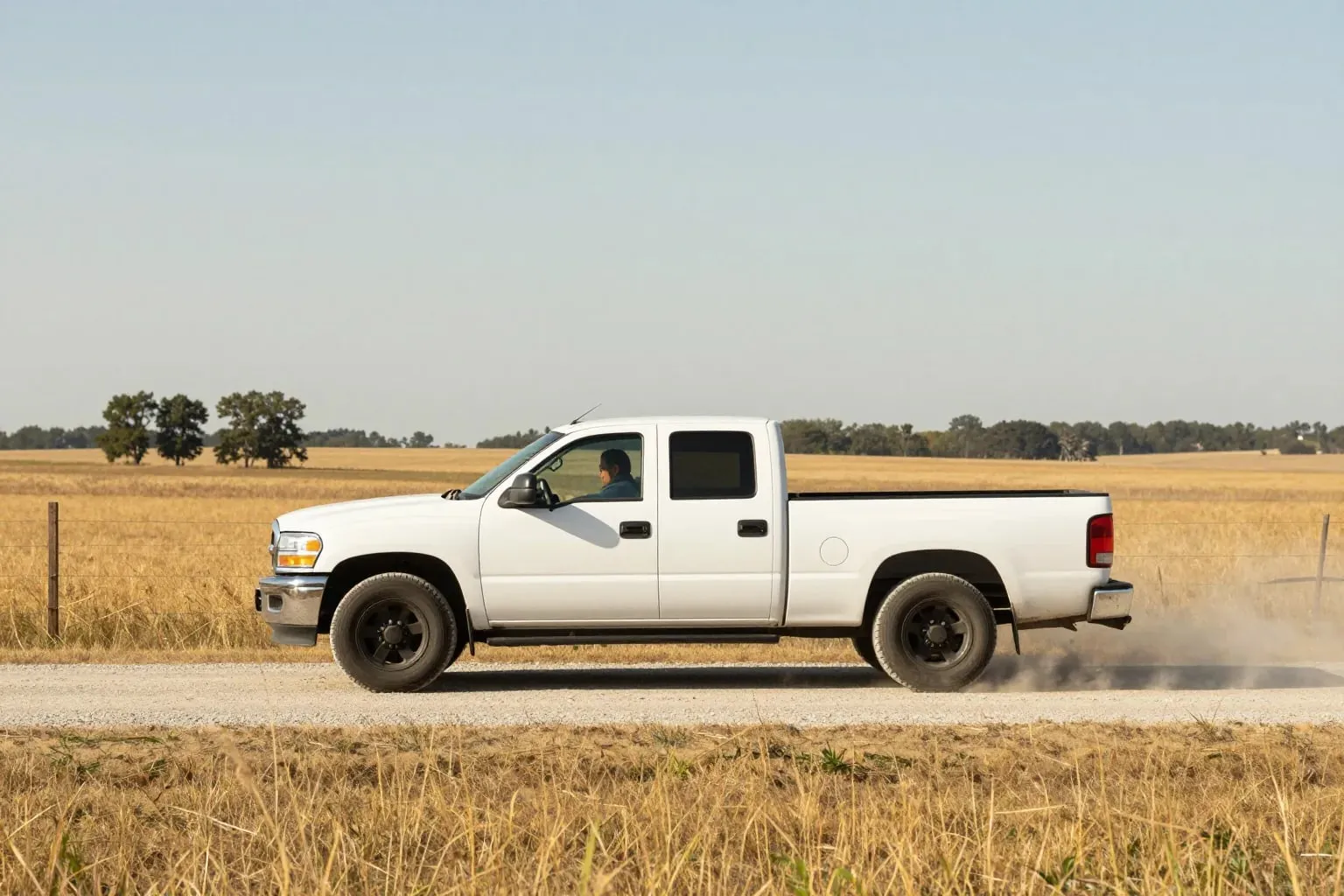
Anyone who has followed a grain truck or a gravel hauler down a washboard road knows the sound: a sharp tick, then a star-shaped chip right in your line of sight. Loose aggregate, oncoming traffic on narrow roads, and freshly graded shoulders all put rocks in the air. Add big temperature swings between a cold morning and a hot afternoon cab, and a small chip can run into a long crack across the glass within days.
That matters for insurance because a chip and a full replacement are different repairs with very different costs, and your policy may treat them differently too.
Which coverage pays for a cracked windshield
The Insurance Information Institute (Triple-I) explains that comprehensive coverage pays to repair a cracked or shattered windshield (opens in a new tab), along with other non-collision damage such as falling objects, fire, theft, hail and contact with animals. Triple-I also notes that some policies include no-deductible glass coverage, and some insurers sell supplemental glass coverage (opens in a new tab) as an add-on.
Here is how the most common glass situations usually sort out:
| What happened | Coverage that usually applies | Deductible? |
|---|---|---|
| Rock thrown by a truck or your own tires on gravel | Comprehensive | Yes, unless you have glass coverage or a state waiver |
| Hail or a falling branch cracks the glass | Comprehensive | Same as above |
| Windshield broken in a deer strike | Comprehensive (animal contact) | Your comprehensive deductible |
| Glass breaks when you slide into a ditch or post | Collision | Your collision deductible |
| Window smashed in a break-in | Comprehensive | Same as above |
| A crack that spreads from an old, unrepaired chip | Usually treated as the original glass loss; ask your insurer | Varies |
| Liability-only policy, any of the above | Nothing on your own policy | Not applicable |
If your windshield goes during a deer collision, our guide to comprehensive vs. collision for wildlife strikes covers how the rest of that claim is handled.
States that waive the glass deductible
A few states go further than the standard policy. Verified as of October 2026:
- Florida. State law says the deductible on any policy with comprehensive coverage does not apply to windshield damage (opens in a new tab). Note that the statute specifically names the windshield, not every piece of glass in the vehicle.
- South Carolina. South Carolina has required insurers to cover windshield replacement without a deductible for drivers who carry comprehensive. In 2026, the state House passed a bill (H.4817) that would make no-deductible glass an optional coverage starting January 1, 2027, rather than automatic. As of May 2026 it was still waiting in a Senate committee, according to local reporting (opens in a new tab). We couldn’t confirm its final status, so check with the South Carolina Department of Insurance before you rely on either version.
- Kentucky. Reporting on the South Carolina bill (opens in a new tab) describes Kentucky as the only other state, alongside Florida, with a similar requirement. Confirm the current rule with the Kentucky Department of Insurance.
Some other states have rules about glass repair shops, aftermarket parts or how insurers can steer you to a vendor. Those rules change, so your state insurance department’s website is the place to check.
Everywhere else, whether you pay a deductible on glass comes down to what’s on your declarations page. That’s why we ask about glass coverage when we build a truck and auto policy for someone who drives gravel every day.
Repair or replace?
Small chips can often be filled with resin, which stops them spreading and keeps the original factory seal. Long cracks, damage in the driver’s direct line of sight, or damage near the edge of the glass usually mean replacement. A reputable glass shop will tell you which applies.
A few things to know before you schedule:
- Act fast on chips. A chip that’s repairable on Monday may be a full windshield by Friday after a cold snap and a few miles of washboard.
- Ask how your insurer treats chip repair. Many insurers handle a resin repair differently from a full replacement, sometimes without applying the deductible. Policies vary, so ask before you assume.
- Driver-assist cameras. Many newer pickups and SUVs have lane-keeping or automatic braking cameras mounted behind the windshield. After a replacement, those systems may need recalibration. Make sure the estimate includes it if your vehicle needs it.
- You may get to pick the shop. Insurers often have preferred glass vendors, which can make scheduling easier. If you have a local shop you trust, ask your insurer what your options are.
Should you file a glass claim at all?
When the deductible is waived, filing is usually simple. When it isn’t, do the math first.
A quick checklist before you call
- Do you carry comprehensive coverage on this vehicle? (Check your declarations page.)
- What is your comprehensive deductible, and do you have separate glass coverage?
- Does your state waive the deductible on windshield damage?
- Is it a chip that can be repaired, or a crack that needs replacement?
- Does the vehicle have windshield-mounted cameras or sensors?
- Have you filed other comprehensive claims recently?
- Is the crack in your line of sight, making the vehicle unsafe or illegal to drive?
Imagine you carry a comprehensive deductible higher than the shop’s replacement quote. Filing gets you nothing except a claim on your record. Flip it around: if your deductible is low, or your state waives it, filing usually makes sense. The point is to know the numbers before you pick up the phone.
Picking the right deductible for gravel-road life
If your daily drive includes miles of county gravel, glass claims are a real, recurring cost. A few ways to think about it:
- Comprehensive is often the less expensive of the two physical damage coverages. Triple-I notes that comprehensive generally costs significantly less than collision (opens in a new tab), which is one reason many rural drivers keep it even on older trucks.
- Ask about glass coverage specifically. In states without a waiver, a glass endorsement can reduce or remove the out-of-pocket cost per claim. Weigh what it adds to the premium against how often you actually replace glass.
- Don’t set the deductible higher than you can comfortably pay. The National Association of Insurance Commissioners (NAIC) suggests you weigh premium against deductible (opens in a new tab) based on your own finances.
- Look at every vehicle in the household. A ranch truck that lives on gravel and a commuter car that mostly sees pavement might warrant different comprehensive deductibles. Our post on multi-vehicle households goes into setting coverage vehicle by vehicle.
If the truck is older and you’re weighing whether physical damage coverage still pays for itself, read when to drop collision on an older vehicle first. Keeping comprehensive while dropping collision is a common middle ground for gravel-road drivers.
Trucks used for the farm or a business
If your pickup hauls feed, tools or a trailer for work, make sure the policy reflects that use. A glass claim is a bad time to discover a classification problem. We cover this in our farm, ranch and business-use vehicles service and in our guide to insuring pickup trucks.
Next step
If you’re not sure whether you have glass coverage, what your comprehensive deductible is, or whether your state waives it, we can go through your declarations page with you. Book a free consultation with a licensed agent and we’ll show you where you stand before the next rock finds your windshield.
Frequently asked questions
Is a rock chip from a gravel truck a comprehensive or collision claim?
On most personal auto policies, glass damage from a flying rock falls under comprehensive coverage, which pays for damage that isn't caused by a collision. If you only carry liability coverage, there is usually nothing on your own policy that pays to fix your windshield.
Will a windshield claim raise my rate?
It depends on the insurer and your state. Comprehensive claims are often treated differently from at-fault accidents, but a string of claims in a short period can still affect pricing at renewal. Ask your agent how your insurer handles glass claims before you file.
Which states require insurers to waive the glass deductible?
Florida law says the deductible on comprehensive coverage does not apply to windshield damage. Kentucky and South Carolina are also reported to have no-deductible glass rules, and South Carolina lawmakers considered a 2026 bill to make that optional starting in 2027. Check your state insurance department for the current rule.
Should I repair a small chip or wait until I need a new windshield?
Getting a small chip repaired soon usually makes sense, because chips tend to spread with temperature swings and road vibration. Many insurers handle chip repair differently from a full replacement, so ask how yours treats it.
Do I need to tell my insurer about windshield cameras?
Yes, mention them when you report the claim. Many newer trucks and cars have driver-assist cameras mounted at the windshield that may need to be recalibrated after a replacement, and that work should be part of the repair estimate.
Sources
- Triple-I: What is covered by a basic auto insurance policy? (opens in a new tab)
- Triple-I: Auto insurance basics, understanding your coverage (opens in a new tab)
- Triple-I: What is covered by collision and comprehensive auto insurance? (opens in a new tab)
- Florida Statutes 627.7288: Comprehensive coverage; deductible not to apply to motor vehicle glass (opens in a new tab)
- WRHI: South Carolina insurance bill targets no-deductible windshield replacements (May 2026) (opens in a new tab)
- Post and Courier: SC legislation on windshield replacement requirement (opens in a new tab)
- NAIC: Best practices for buying auto insurance (opens in a new tab)