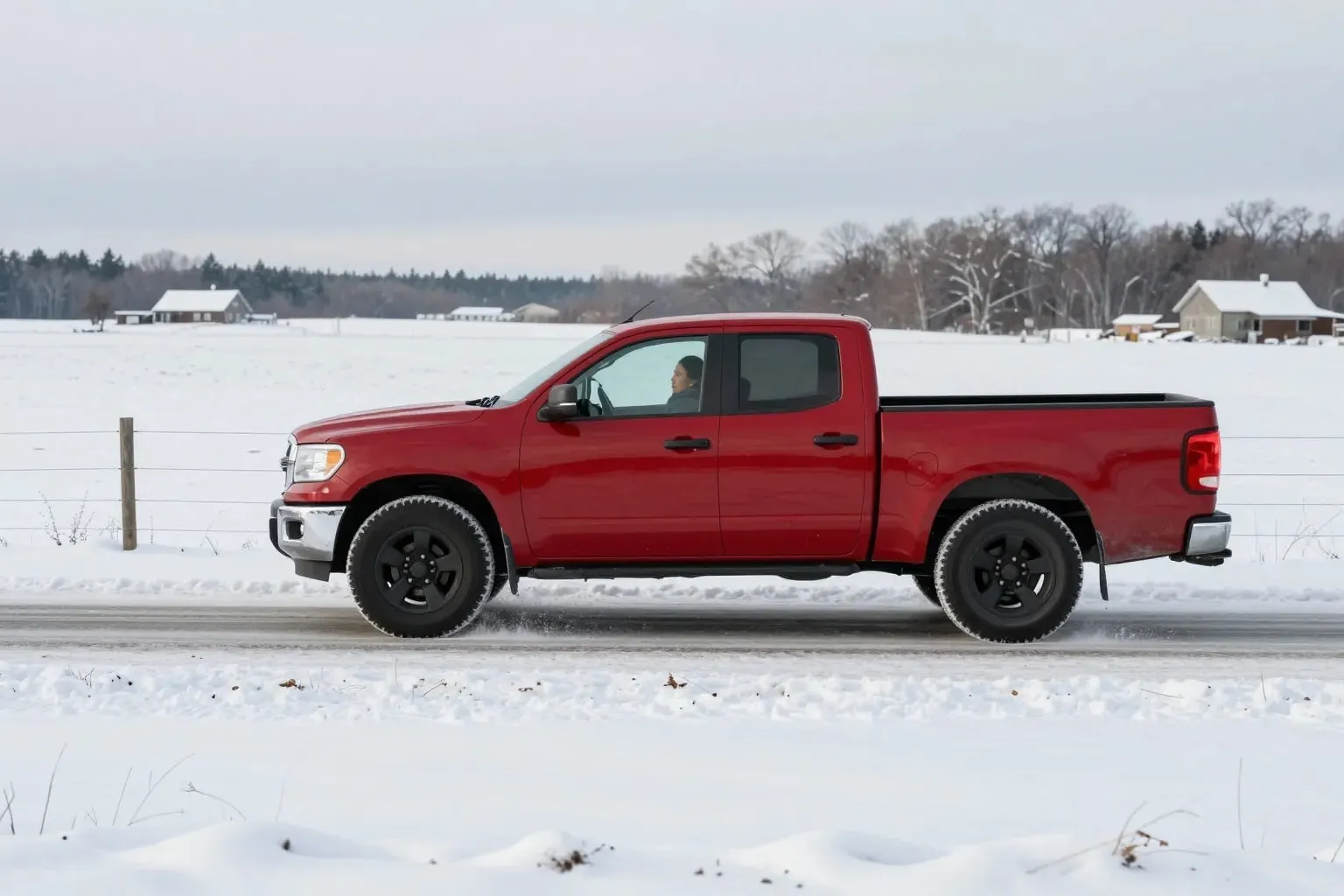
Winter Driving and Claims: What Your Auto Policy Covers
Sliding into a ditch, ice falling on the hood, a frozen battery: here's which auto coverage pays for common winter problems on rural roads.
Auto insurance
We help you get the filing your state requires, keep it from lapsing, and work back toward standard coverage over time.
In a town with no bus line and the nearest grocery store twenty minutes away, losing your license isn’t an inconvenience. It can mean missing shifts at the plant, not getting to the feed store, or asking a neighbor to drive you to the hospital two counties over. So when a letter from the state says you need an SR-22 before you can drive again, the goal is simple: get legal, stay legal, and get back to normal as quickly as the rules allow.
This page fits you if:
You may need something else if your record is clean and you’re simply shopping for better coverage. In that case, our truck and auto insurance page is the place to start. If the vehicle in question is mainly a farm or work truck, read our page on farm, ranch and business-use vehicles too, since how the truck is used affects which policy fits.
An SR-22 is a certificate, not a policy. Your insurer files it with the state to confirm you carry at least the liability coverage the state requires. Here’s how it usually goes.
The answer comes down to which vehicles you’ll really be driving. Imagine someone who sold their pickup after a DUI, moved back to the family place, and now drives the farm truck to the co-op twice a week. That truck is regularly available to them, so a non-owner policy alone probably isn’t the right tool; the household’s owner policy likely needs to list them as a driver, with the filing attached. Now imagine someone who lives in town, has no vehicle in the household and borrows a friend’s car once a month. A non-owner policy with the filing may be exactly what they need. Iowa’s rules show why the details matter: there, you may drive and register only the vehicles listed on your SR-22. We walk through your actual week of driving before recommending either path.
The length of time and the details differ, as these official sources show:
| State | Filing | How long | Details from the state |
|---|---|---|---|
| Texas | SR-22 | Two years | Counted from the conviction date or crash judgment date; required after crash-related suspensions, a second or later no-insurance conviction, or an unpaid crash judgment (Texas DPS (opens in a new tab)) |
| Iowa | SR-22 | Two years | Required from the first day of the suspension or revocation; you may drive and register only vehicles listed on the SR-22 (Iowa DOT (opens in a new tab)) |
| Washington | SR-22 | Three years in most cases | Counted from the date you’re eligible to reinstate (Washington DOL (opens in a new tab)) |
| California | Proof of insurance on file | Three years | After a suspension for lacking financial responsibility ends (California DMV (opens in a new tab)) |
| Virginia | SR-22 | Three years | For owners of uninsured vehicles whose privileges were suspended (Virginia DMV (opens in a new tab)) |
| Florida | FR-44 | Three years | After a DUI conviction, counted from reinstatement, with higher liability limits (Florida HSMV (opens in a new tab)) |
FR-44 filings are used only in Florida and Virginia. Florida’s FR-44 calls for at least $100,000 per person and $300,000 per crash in bodily injury liability and $50,000 in property damage liability, or a $350,000 combined single limit. Those are well above ordinary state minimums. For comparison, Virginia’s minimum for policies effective on or after January 1, 2025 is $50,000 per person, $100,000 per crash and $25,000 in property damage, and Texas DPS lists $30,000, $60,000 and $25,000.
The filing only proves you meet the state’s minimum liability. What you buy around it is up to you, and on rural roads it’s worth thinking past the minimum.
| Policy option | Who it fits | What it covers | Watch for |
|---|---|---|---|
| Owner policy with SR-22 | You own or lease the vehicle you drive | Liability on your listed vehicles, plus any collision, comprehensive and other coverage you add | Every household driver and vehicle typically needs to be disclosed |
| Non-owner policy with SR-22 | You don’t own a vehicle and only drive occasionally | Liability when you drive a vehicle you don’t own | Generally excludes vehicles you own or regularly use, such as a household car |
| Nonstandard insurer | Drivers turned down by standard companies | Can include broader coverage options than a state plan | Higher premiums; compare carefully |
| State assigned risk plan | Drivers who can’t find coverage elsewhere | Coverage available regardless of driving history, per the Insurance Information Institute | Premiums are substantially higher than in the regular market |
| Higher liability limits | Anyone who wants more protection than the minimum | More money available if you injure someone | Required for FR-44 in Florida and Virginia |
| Collision and comprehensive | Financed vehicles or newer trucks | Your own vehicle’s damage, including deer strikes | Our article on dropping collision on older vehicles helps decide |
| Roadside and towing | Long drives and few tow trucks | A tow when you break down far from town | See towing and roadside coverage |
The Insurance Information Institute (opens in a new tab) explains that every state has an assigned risk pool or equivalent, where participating insurers must accept drivers the state assigns to them. It’s a safety net, not usually a first stop, because nonstandard insurers may offer more complete coverage.
We don’t publish prices because they depend on your situation. These factors carry the most weight:
There’s no enrollment season for auto insurance, but SR-22 cases run on hard deadlines:
Winter is a hard time to be caught without coverage. If your filing runs through the cold months, our piece on winter driving claims is worth a read.
It starts with a straightforward conversation. One of our licensed agents reads your state notice with you, confirms what kind of filing you need and for how long, and asks how you’ll actually be driving during that time. That last part matters: a non-owner policy can look like the simple answer, but if a family vehicle is available to you every day, it may not be the right fit.
Next, we look for insurers willing to write your situation, compare owner and non-owner options where both make sense, and explain the trade-offs between minimum limits and stronger protection. If you’re turned down in the regular market, we explain how your state’s assigned risk plan works.
When you choose a policy, we make sure the filing is requested at the start so the insurer can submit it to the state. We encourage you to confirm your reinstatement status with the state before getting behind the wheel.
During your filing period, we keep in touch about renewals so coverage doesn’t lapse. When the requirement ends, and your record has had time to improve, we review whether you can move to a standard policy. We can’t promise when that will happen, but we’ll be honest about where you stand each year.
An SR-22 is a detour, not a dead end. Book a free consultation with a licensed agent and we’ll help you sort out exactly what your state requires, find a policy that carries the filing, and set you up to keep it in place until you’re clear. There’s no cost to work with us.
No. An SR-22 is a certificate your insurance company files with the state to show you carry at least the required liability coverage. You still need an actual auto policy behind it. Texas DPS, for example, says an insurance card or policy won't be accepted in place of the SR-22 itself.
It depends on your state and the reason. Texas and Iowa generally require two years. Washington says three years in most cases, counted from the date you're eligible to reinstate. California requires proof for three years after certain financial responsibility suspensions end. Your state's notice will spell out your exact period.
Both are certificates of insurance filed with the state, but FR-44 filings are used only in Florida and Virginia and typically follow alcohol-related offenses. They require higher liability limits than the state minimum. In Florida, for example, an FR-44 after a DUI calls for $100,000 per person and $300,000 per crash in bodily injury liability plus $50,000 in property damage, kept for three years from reinstatement.
Often, yes, through a non-owner policy. Texas DPS specifically points drivers without a vehicle toward a non-owner SR-22 policy. A non-owner policy generally doesn't cover vehicles you own or have regular use of, such as a household car or a family farm truck, so we check how you'll actually be driving before recommending one.
The insurer is required to tell the state. In Texas, for example, your insurer must notify DPS if your SR-22 is canceled or lapses, and your license and registration may be suspended again if a new SR-22 isn't filed in time. Depending on your state, the clock on your filing period could also restart, so it pays to treat that bill as the one you never miss.
Many can, but not every insurer writes drivers who need one. The Insurance Information Institute explains that companies set their own guidelines, and drivers who are turned down can look to nonstandard insurers or their state's assigned risk plan. We help you find a company that will write your situation.
The filing is mostly paperwork, though some insurers charge a fee to file it. What usually drives the premium is the reason behind it, such as a DUI, a crash without insurance or a string of violations. Those are rated as higher risk whether or not a filing is involved.
Usually the requirement comes from the state that suspended your license, and moving doesn't erase it. You'll typically need a policy in your new state that can still provide the filing your original state expects. Check with the original state's licensing agency before you cancel anything, and tell us so we can line up coverage that meets both states' rules.
Time and a clean record do most of the work. The Insurance Information Institute notes that a longer history of safe driving and paying on time improves your chances of returning to a standard insurer. Keep the filing in place for the full required period, avoid new violations and lapses, and ask about defensive driving courses where they help.
Last reviewed by the Pinemark Licensed Agent Team on October 19, 2026.
Important information
Auto insurance rates, discounts and coverage options vary by state, carrier, driver and vehicle, and all discounts are subject to eligibility. State minimum liability requirements differ; minimum limits may not fully protect you after a serious accident.
Plans, benefits and pricing vary by state and carrier. Quotes aren’t final until the carrier issues a policy.
Keep reading
Sliding into a ditch, ice falling on the hood, a frozen battery: here's which auto coverage pays for common winter problems on rural roads.
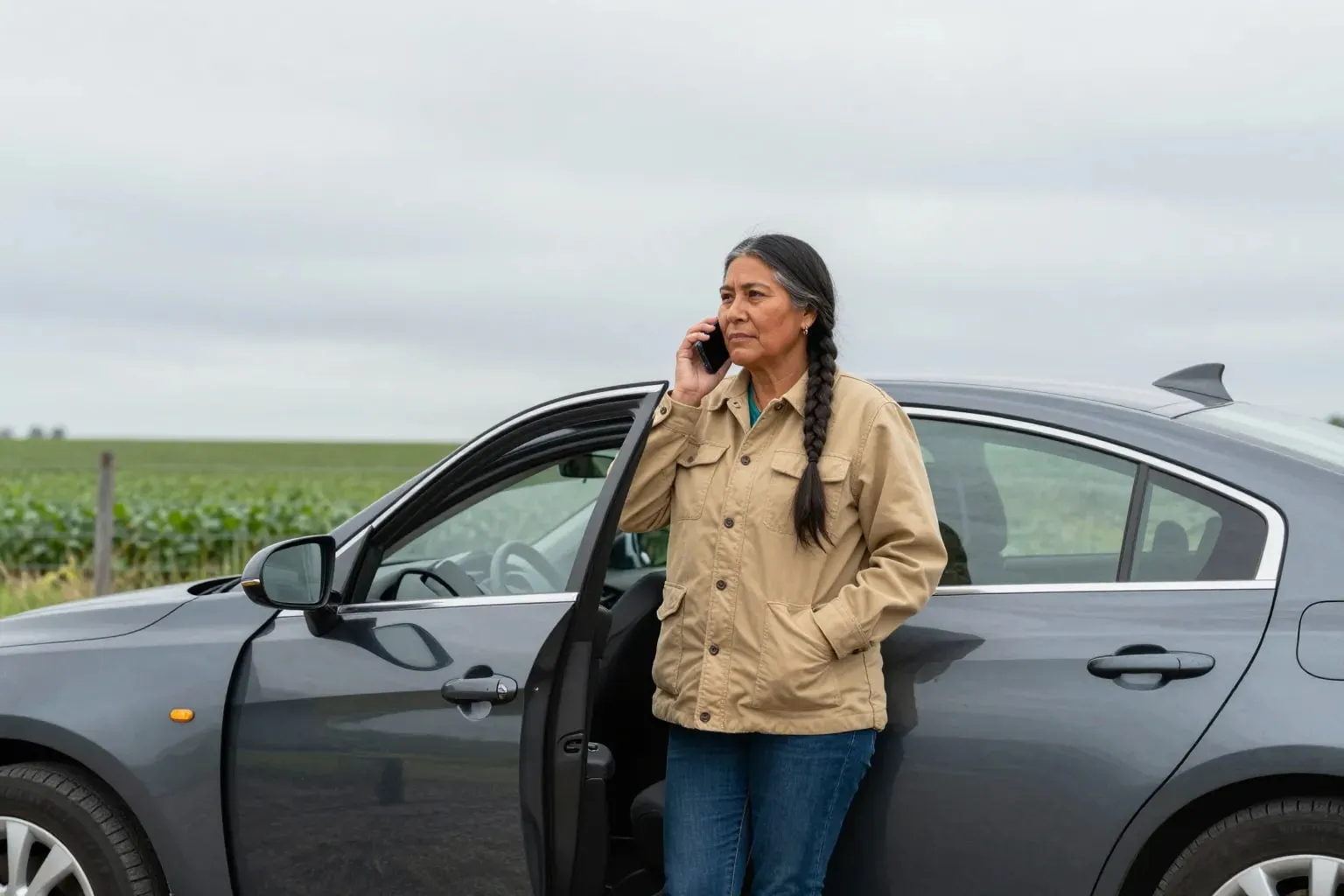
Towing coverage pays to move a car that can't be driven, but limits matter when the shop is 50 miles off. Here's what to check before you need a tow.

When does collision coverage stop paying for itself on an older truck or car? Use the 10-times-premium rule, your savings and your road risks to decide.
Talk to a licensed agent
Book a time with a licensed agent. We’ll look at health and auto coverage for your whole household, including the doctors and roads you actually use. There’s no cost and no obligation.