Insuring Pickup Trucks: Towing, Payload and Business Use
How towing, hauling and business use affect pickup truck insurance, when a personal auto policy stops fitting, and what to tell your agent.
Auto insurance
We map how each truck, trailer and pickup on your place is really used, then match the policy to that use before a claim puts it to the test.
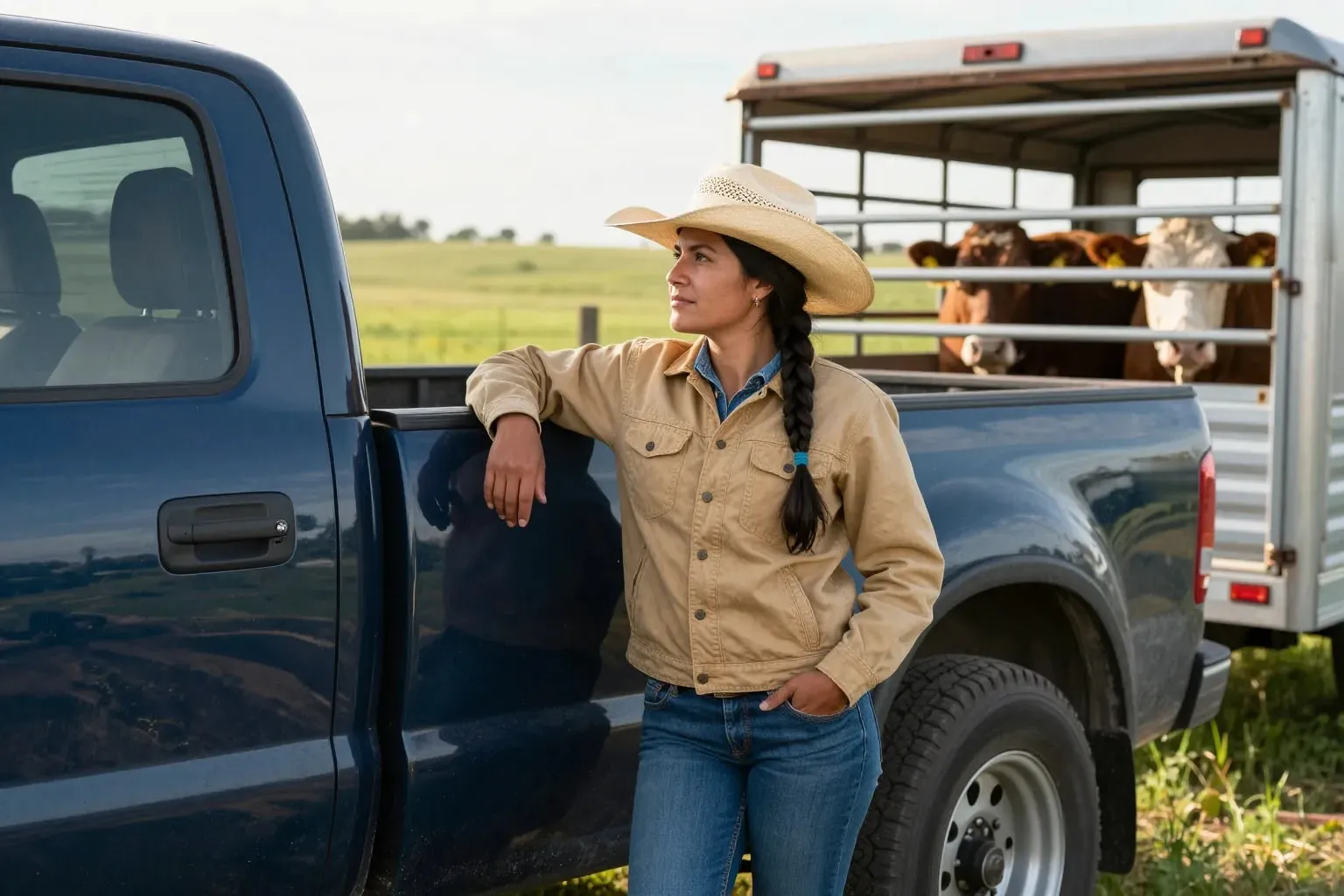
On a working place, one pickup can live three lives in a week. Monday it takes the kids to the bus at the end of the gravel road. Wednesday it pulls round bales to the far pasture. Saturday a neighbor asks you to move a few steers to the sale barn and hands you cash for the trip. Each drive can fall under a different part of a policy, and some may fall outside it entirely if the insurer never heard about them.
This page is for households where vehicles do real work:
If your vehicles only handle commuting, errands and family trips, our truck and auto insurance page is the better fit. For four-wheelers and side-by-sides, start with our guide to ATV and UTV coverage. A full trucking operation hauling freight for many shippers usually needs a specialized trucking program, and we’ll tell you plainly if that’s outside what we place.
Getting this right is mostly about describing your vehicles honestly. Here’s the order we work in.
There are two kinds of “classes” people mix up. The first is how your insurer classifies a vehicle. Many personal auto insurers offer a farm-use rating for pickups that are used mainly for farm chores and family driving rather than daily commuting. Commercial auto insurers usually go further, grouping trucks by size or weight, by how far from home base they typically travel, and by what they do: carrying your own tools and supplies, delivering goods you sell, or hauling other people’s property.
The second is how the government classifies a vehicle for safety rules. The Federal Motor Carrier Safety Administration defines a covered farm vehicle (opens in a new tab). To qualify, the vehicle must be driven by a farm or ranch owner or operator, a family member or an employee; carry agricultural commodities, livestock, machinery or supplies to or from a farm or ranch; carry a farm plate or another state-approved farm identifier; not be used for hire; and not be hauling hazardous materials that require placards. A qualifying vehicle at or under 26,001 pounds (gross vehicle weight or weight rating, whichever is greater) gets the exemptions anywhere in the country. Above 26,001 pounds, the exemptions apply in your home state, or within 150 air miles of your farm or ranch if you cross into another state.
According to FMCSA’s questions and answers on the agricultural exemptions (opens in a new tab), covered farm vehicles are exempt from federal CDL rules, drug and alcohol testing, driver medical certificates and the federal inspection and repair rules. Driving and equipment rules, such as lights and brakes, still apply, and each state decides how it identifies these vehicles. None of this changes your insurance, but it signals how regulators and insurers will view the truck.
Farm plates usually cost less than commercial registration, and in exchange they limit what the truck may do. The details differ a great deal from state to state, as these examples show:
| State | Registration | What it allows | Notable limits |
|---|---|---|---|
| Texas | Farm truck and farm trailer plates (Texas DPS (opens in a new tab)) | Hauling your own livestock, poultry, dairy, timber or farm products to market or processing; bringing farm workers to the farm; hauling supplies to the farm at no charge; family trips to church, school or medical care | Farm trucks can’t be used for gainful work other than farming or ranching; the farm trailer plate isn’t available for trailers used for hire |
| New York | Agricultural class and farm class (NY DMV (opens in a new tab)) | Agricultural class: hauling your own farm or dairy goods and supplies, personal use, and lumbering incidental to the farm | Farm class: limited to the most direct route and no more than 25 miles one way, for listed trips such as between parts of the farm or to a repair shop; liability insurance is required for both classes |
| Maine | Farm truck plates (Maine BMV (opens in a new tab)) | Trucks used primarily for running the farm and for the farmer’s personal and family transportation, including delivering your own farm products, such as hay | No for-hire work, for-hire construction or landscaping, retail delivery or timber harvesting; trucks with a partial inspection must stay within 20 miles of the farm |
If your state isn’t listed, we look up its rules with you. A farm plate is a promise about how you’ll use the truck; if the real use drifts beyond it, both registration and insurance fall out of step.
This is where most coverage gaps show up in farm country. Hauling your own calves, hay and fencing supplies is part of running your operation. Hauling a neighbor’s cattle, delivering someone else’s hay or moving another farm’s equipment for pay is generally treated as for-hire work.
That distinction matters three ways. First, FMCSA’s covered farm vehicle definition excludes for-hire operations. FMCSA does carve out one situation: a tenant farmer hauling the landlord’s share of the crop under a crop-share arrangement, in a vehicle the tenant owns and drives, isn’t considered for-hire. Second, several states, including the Texas and Maine examples above, restrict for-hire use on farm plates. Third, many personal auto policies exclude carrying people or property for a fee, and a farm-use rating assumes you’re doing farm work, not running a hauling business.
When for-hire hauling crosses state lines, federal minimums apply. FMCSA’s insurance filing requirements (opens in a new tab) list $300,000 in liability for for-hire general freight carriers with vehicles under 10,001 pounds gross vehicle weight rating, $750,000 at 10,001 pounds and above, $1,000,000 for certain hazardous materials, and $5,000,000 for explosives, poison gas or radioactive materials. Interstate for-hire carriers also need an MCS-90 endorsement on their policy. For-hire work inside one state follows that state’s rules, so we check them before you start.
Whether your trucks land on a personal or commercial policy, these are the pieces to understand. The Insurance Information Institute’s business vehicle guide (opens in a new tab) is a good plain-language reference on the commercial side.
| Coverage | What it does | Farm and ranch example | Watch for |
|---|---|---|---|
| Liability (bodily injury and property damage) | Pays others for injuries and damage you cause | Your loaded stock trailer jackknifes and hits an oncoming car | Commercial policies often use one combined limit; heavier trucks warrant higher limits |
| Collision | Repairs your vehicle after a crash, minus your deductible | You slide into a culvert on a muddy county road | Paid at actual cash value, so older trucks get less |
| Comprehensive | Covers theft, fire, hail, flood and animal strikes | A deer comes through the windshield at dusk | Our guide to insuring pickup trucks covers towing and payload questions |
| Uninsured and underinsured motorist, medical payments or PIP | Protects you and passengers when the other driver can’t pay, or pays medical bills | A driver with no insurance runs a stop sign at a rural crossroads | Requirements and options vary by state |
| Hired and non-owned auto | Covers business use of vehicles you rent, borrow or that employees own | Your hired hand runs to town for parts in his own truck | Sits on top of the employee’s own policy |
| Trailer physical damage | Covers damage to or theft of the trailer itself | A gooseneck is stolen from the sale barn lot | Usually requires listing the trailer |
| Cargo | Covers property you’re hauling | Hay or equipment damaged in a fire on the road | Personal auto policies generally don’t cover cargo |
| Federal filing and MCS-90 | Proves required limits for interstate for-hire work | Hauling grain across a state line for pay | Needed for interstate for-hire operations |
If your household runs several vehicles with mixed uses, our article on multi-vehicle households and farm use walks through how to sort them.
We can’t quote a price without your details, and we won’t guess at one here. These are the factors that move the number:
Auto coverage doesn’t have an open enrollment season, so the important dates are the ones your operation creates:
We start with a conversation, not a form. One of our licensed agents asks how your place runs through the year: what moves when, who drives and what you do for neighbors. From that we build a vehicle-by-vehicle use map and check it against your registrations, so you can fix any mismatch.
Then we compare options, whether that’s a personal policy with farm-use ratings, a commercial policy for business-titled trucks, or both. We walk through the exclusions that matter most for you, especially for-hire hauling, trailers and cargo.
When you’re ready, we handle the application and make sure every vehicle, trailer and driver is listed correctly. If your work requires a state or federal filing, the insurer makes it, and we help you confirm it’s done.
Each year, ideally before your busiest season, we review the policy with you. If you also need coverage for people, not just trucks, see farm and small business health. If a household driver has a serious violation on record, see high-risk auto and SR-22 filings.
Every operation runs a little differently, and the right setup depends on the details of yours. Book a free consultation with a licensed agent and we’ll go through your trucks, trailers and drivers one at a time, check your state’s plate rules, and show you where your current coverage fits and where it doesn’t. There’s no cost to work with us.
Not by itself. A farm plate is a registration status set by your state, and it comes with its own limits on how the truck can be used. Your insurer still needs to know how the truck is actually driven, and some states, such as New York, require proof of liability insurance for farm-plated vehicles. Tell us about the plate so the policy and the registration describe the same truck.
Often, yes. Many insurers will write a pickup that's used for farm chores and family driving on a personal policy, sometimes with a farm-use rating. The Insurance Information Institute notes that a vehicle used primarily for business, or one titled to a business, generally falls outside personal auto coverage, so the answer depends on how the truck is used and whose name is on the title.
It's a federal category from the Federal Motor Carrier Safety Administration. A covered farm vehicle is run by a farm or ranch owner, family member or employee, carries farm commodities, livestock, machinery or supplies to or from the farm, has a farm plate or other state farm identifier, isn't used for hire and isn't hauling placarded hazardous materials. Qualifying vehicles are exempt from certain federal rules, such as the CDL requirement, but the category is about safety regulation, not insurance.
It can be. Hauling someone else's livestock or goods for pay is generally treated as for-hire work, which can take a truck out of the covered farm vehicle category and outside what many personal and farm-use policies are written to cover. Some states also bar for-hire use on farm plates. Call us before you take the job so we can check your policy and registration.
If you haul property for hire across state lines, federal rules apply. FMCSA lists minimum liability of $300,000 for for-hire general freight carriers under 10,001 pounds gross vehicle weight rating and $750,000 at 10,001 pounds and up, with higher amounts for certain hazardous materials. Intrastate for-hire work follows your state's rules, which vary.
Liability for a trailer you're towing often extends from the towing vehicle's policy, but damage to the trailer itself usually isn't covered unless the trailer is listed. Policies differ, so we check the wording and list each trailer you want protected against damage or theft.
Yes. Insurers want to know who regularly drives each vehicle. The Insurance Information Institute also points out that a business can be held responsible for letting an unqualified driver use its vehicles, so checking a driving record before handing over the keys protects you as well as the policy.
Don't count on it. The Insurance Information Institute notes that personal umbrella policies typically exclude claims that come from business activities. If your trucks are part of a farm or ranch business, we look at commercial or farm liability options that are built for that exposure.
At least once a year, and any time your operation changes: a new truck or trailer, a new driver, a different radius of travel, or starting custom work for others. A review before your busiest hauling season is a good habit, since that's when most of the miles happen.
Last reviewed by the Pinemark Licensed Agent Team on October 19, 2026.
Important information
Auto insurance rates, discounts and coverage options vary by state, carrier, driver and vehicle, and all discounts are subject to eligibility. State minimum liability requirements differ; minimum limits may not fully protect you after a serious accident.
Plans, benefits and pricing vary by state and carrier. Quotes aren’t final until the carrier issues a policy.
Keep reading
How towing, hauling and business use affect pickup truck insurance, when a personal auto policy stops fitting, and what to tell your agent.
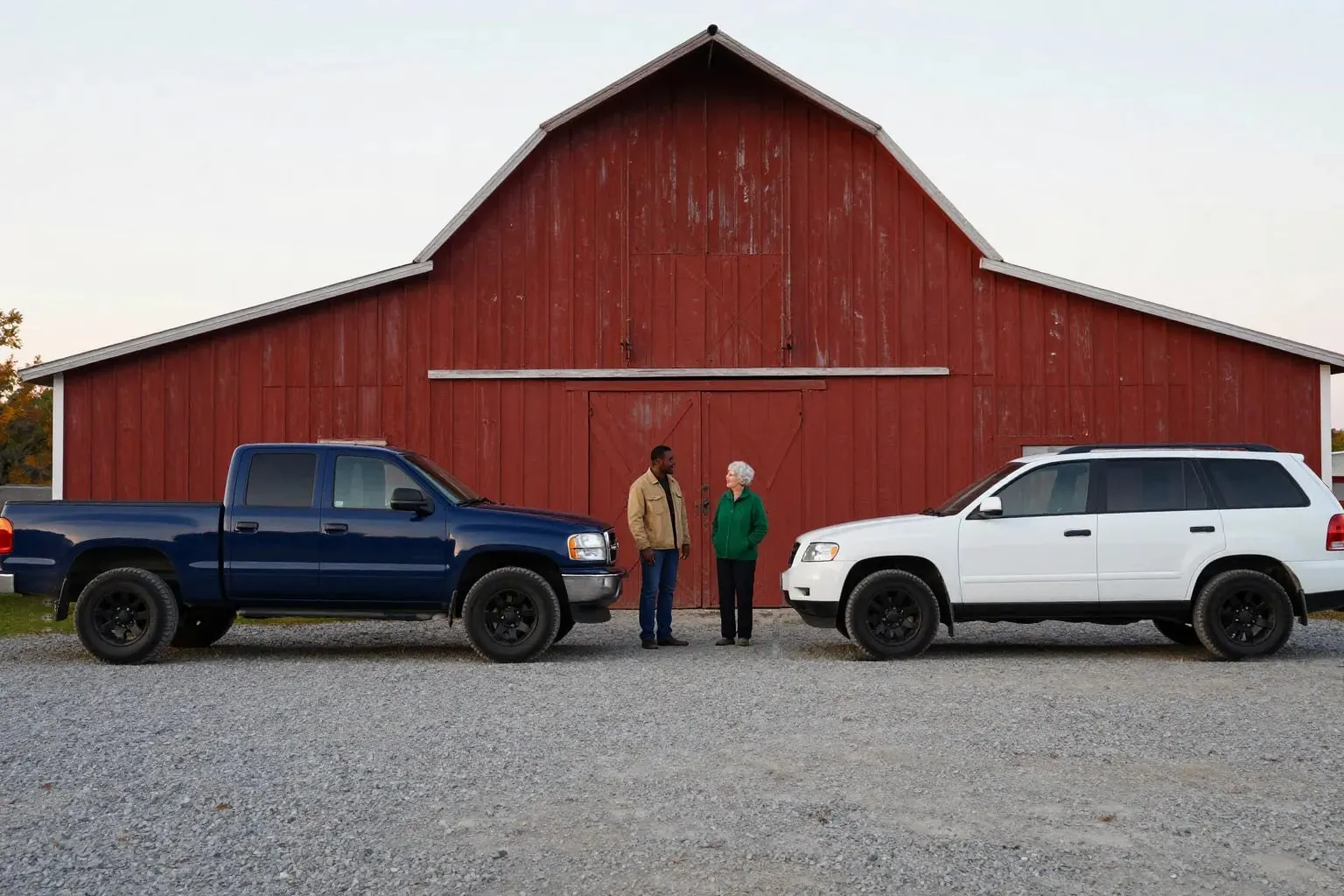
How to insure a household with several trucks, cars and farm vehicles: listing drivers, setting coverage per vehicle, business use and multi-car discounts.
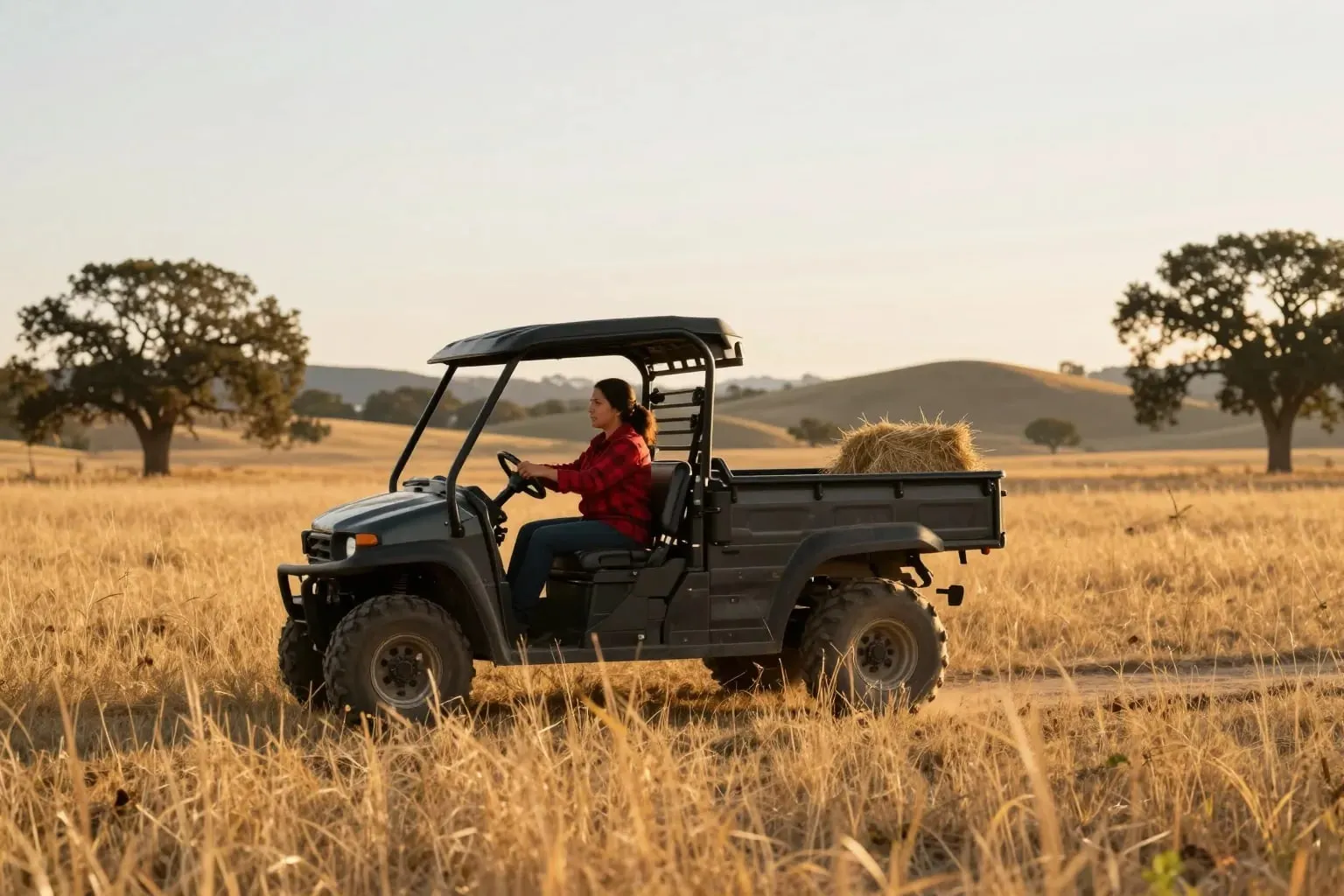
Most personal auto policies aren't built for ATVs and UTVs. Learn where coverage comes from, which states require insurance for road use, and what to ask.
Talk to a licensed agent
Book a time with a licensed agent. We’ll look at health and auto coverage for your whole household, including the doctors and roads you actually use. There’s no cost and no obligation.