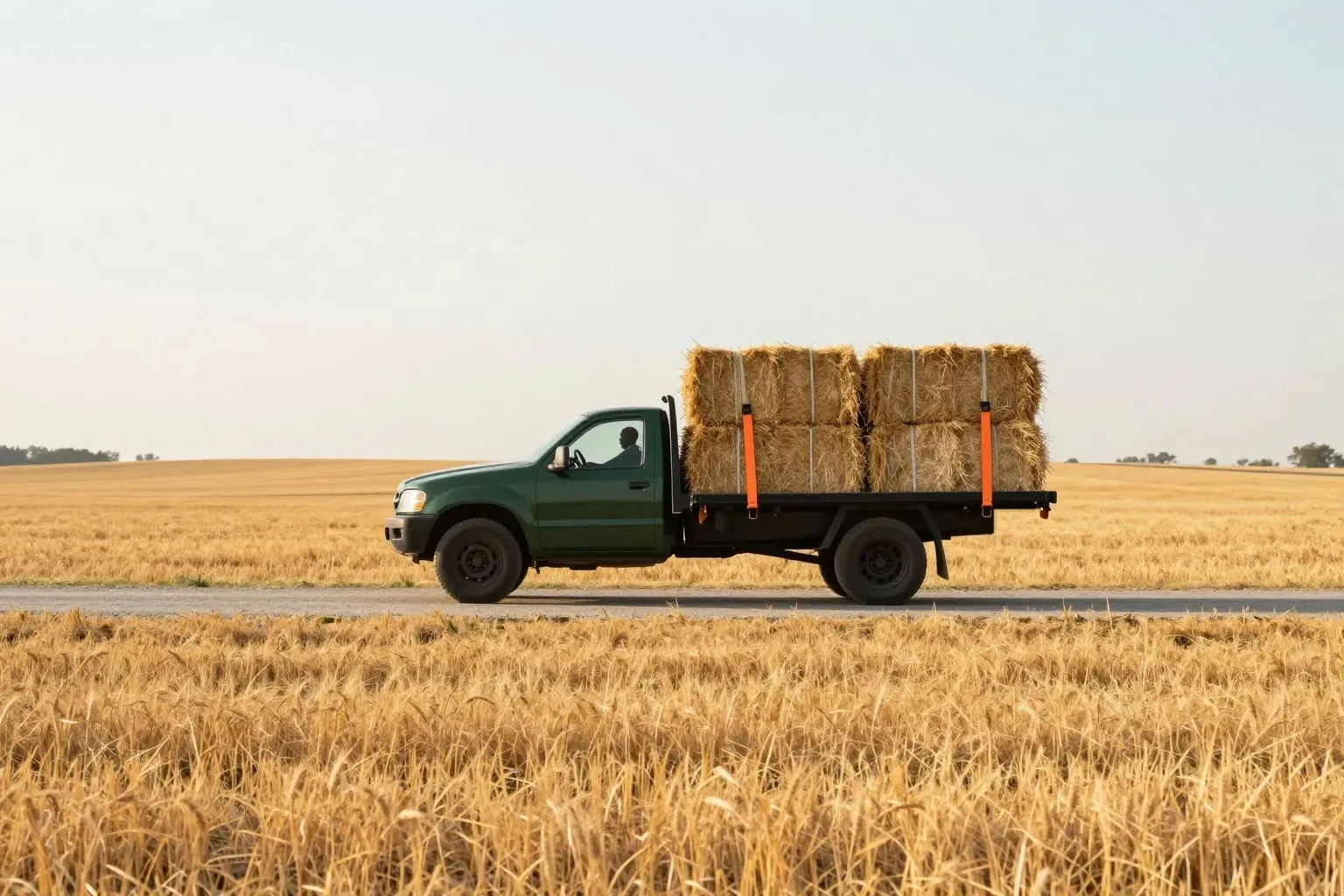
A pickup that commutes to town and pulls a fishing boat twice a summer usually fits fine on a personal auto policy. Once the truck regularly hauls for pay, tows equipment between job sites, is titled to a business, or pulls a heavy gooseneck across state lines, the coverage needs change, and a personal policy may leave serious gaps. The fix is to describe how you really use the truck, what you tow, and who owns it, so the policy matches.
Why trucks are different
Most cars do one job: get people from one place to another. A rural pickup might carry feed on Monday, pull a stock trailer on Wednesday, haul a buddy’s roofing scrap on Friday and go to church on Sunday. Each of those uses touches a different part of an insurance policy, and the lines between “personal” and “business” can blur.
Insurers rate trucks on the same basics as any vehicle, such as driving record, garaging location and coverage choices, but they also want to know about use: commuting, pleasure, farm, business or commercial. Getting that classification right matters more than almost anything else on a truck policy.
Business use: where personal policies stop
The Insurance Information Institute (opens in a new tab) lays out the key points:
- A personal auto policy covers some business use, and occasional work driving can often be handled by tailoring the policy.
- A vehicle used primarily for business likely has no coverage under a personal policy.
- If a business owns the vehicle, a personal auto policy won’t cover it, and a commercial policy is needed. The named insured should match the title.
- If a claim goes beyond personal limits, the business can be sued directly, and the personal insurer won’t defend the business.
- Personal umbrella policies typically exclude business activities.
Imagine a hypothetical electrician who drives a three-quarter-ton pickup between farm jobs across three counties, with ladders on a rack and a box of wire in the bed. The truck is in her name, but she uses it every workday for her LLC. That’s more than occasional business use, and the conversation should cover whether a business-use rating, a commercial policy, or both are the right setup.
Our Farm, Ranch & Business-Use Vehicles page walks through those choices in more detail.
Farm use is its own category
Many insurers recognize farm use separately from general business use, for trucks that mainly run between fields, pastures and the co-op. Farm-use rating can differ from commuting or business rating. If your truck rarely leaves the operation, say so. If it also commutes 40 miles to an off-farm job, say that too.
Towing: two coverage questions for every trailer
Every trailer raises two separate questions:
- Liability while towing. If your trailer swings into another lane and damages a car, does your truck’s liability coverage respond? Personal auto policies often extend liability to a trailer being towed by an insured vehicle, but policy wording varies, especially for trailers used in business.
- Damage to the trailer itself. If the trailer is stolen, hit by a falling tree, or wrecked, is it covered? That usually requires listing the trailer on a policy with its own physical damage coverage.
Then there’s what’s in the trailer. Cattle, hay, a skid steer, or a load of lumber generally aren’t covered by your auto policy. Equipment and cargo usually need farm, inland marine, or commercial coverage.
Payload and add-ons
Trucks tend to get upgraded. Toolboxes, headache racks, bed liners, lift kits, light bars, winches, plows and flatbeds can add real value. Standard policies may limit coverage for aftermarket equipment unless you list it or add custom equipment coverage. Keep receipts and photos.
Loose items are different. The chainsaw in the bed or the welder in the box is usually not covered under auto insurance at all. That gear typically belongs on a homeowners, farm or inland marine policy.
When weight brings federal rules into play
Heavy towing can cross a federal threshold that surprises many truck owners. FMCSA says (opens in a new tab) a vehicle generally needs a USDOT number if it has a gross vehicle weight rating, gross combination weight rating, or actual weight of 10,001 pounds or more and is used in interstate commerce. A heavy-duty pickup paired with a loaded gooseneck or flatbed trailer can hit that combined figure.
Two important caveats:
- States add their own rules. FMCSA notes that many states require USDOT numbers for intrastate commercial vehicles too.
- Farm exemptions exist. FMCSA has agricultural exceptions and exemptions (opens in a new tab) for some farm operations, but the details are specific.
If you’re near that line, check with FMCSA and your state agency before you assume you’re exempt. Hauling for hire under these rules usually means commercial auto insurance is part of the picture.
How truck use lines up with coverage
| How you use the truck | Common setup | Questions to ask |
|---|---|---|
| Commuting, errands, occasional towing for fun | Personal auto policy | Does liability extend to my trailer? Is the trailer listed for damage? |
| Farm chores on your own operation | Personal policy with farm-use rating, or a farm auto policy | Does farm use cover trips to the co-op and sale barn? |
| Driving to job sites for your own trade | Personal policy with business-use rating, or commercial auto | Are tools and equipment covered anywhere? |
| Truck titled to your LLC or farm corporation | Commercial auto policy | Does the named insured match the title? |
| Hauling for pay or towing others’ equipment | Commercial auto policy | Do we need a USDOT number? What cargo coverage applies? |
| Employees driving the truck | Commercial auto, possibly with hired and non-owned coverage | Have we checked driver records? |
What to tell your agent
- Who owns each truck, exactly as the title reads
- Every driver in the household and any employees who drive
- Commuting distance and how often the truck is used for work
- Each trailer: type, value, and what it carries
- Heaviest typical towing setup and whether it crosses state lines
- Aftermarket equipment and roughly what it cost
- Tools or gear that ride in the truck regularly
- Whether you’re paid to haul for anyone else
Physical damage still matters
Trucks rack up miles on gravel and two-lane highways. Collision covers crashes with objects and rollovers, and comprehensive covers things like theft, falling objects, broken windshields and hitting an animal, according to the Insurance Information Institute (opens in a new tab). A lender will typically require both on a financed truck. For the deer side of that, see Deer and Wildlife Collisions: Comprehensive vs. Collision. And if you run a work truck, a family SUV and an old farm pickup, Multi-Vehicle Households: Trucks, Cars and Farm Use covers how to set up the whole fleet. When a long tow is part of the risk, Towing and Roadside Coverage When Help Is Far Away explains roadside options.
How Pinemark helps
Our licensed agents ask the questions above before quoting so the policy fits how your truck actually works. We’ll review your truck and auto insurance and, where business or farm use calls for it, the commercial side. We’ll also flag gear and trailers that need coverage somewhere else.
Next step
If your truck does more than one job, book a free consultation with a licensed agent. Bring your titles, trailer details and a rough idea of your workweek, and we’ll map coverage to it.
Frequently asked questions
Does my personal auto policy cover my truck when I use it for work?
Some business use is often fine on a personal policy, but the Insurance Information Institute notes that a vehicle used primarily for business likely has no coverage under one. Tell your agent how you really use the truck so the policy can be set up to match.
Is my trailer covered when I tow it?
Liability coverage often follows you when you tow a trailer with an insured truck, but damage to the trailer itself usually requires listing it on a policy. Policies differ, so ask your agent to confirm both pieces for each trailer you own.
Are the tools in my truck bed covered by auto insurance?
Usually not. Auto policies generally cover the vehicle and permanently attached equipment, while loose tools and cargo often need a homeowners, farm or inland marine policy. Ask about coverage for added equipment like toolboxes, racks and lift kits too.
When does a pickup and trailer need a USDOT number?
Under FMCSA rules, a vehicle or combination rated or weighing 10,001 pounds or more that's used in interstate commerce generally needs a USDOT number. Many states also require one for intrastate commercial operations, and farm exemptions exist, so check FMCSA and your state agency.
Should a truck owned by my farm LLC be on my personal policy?
Generally no. When a business owns a vehicle, a personal auto policy won't cover it and a commercial auto policy is needed. The named insured should match the name on the title.
Sources
- Insurance Information Institute: Business vehicle insurance (opens in a new tab)
- Insurance Information Institute: What is covered by collision and comprehensive auto insurance? (opens in a new tab)
- FMCSA: Do I need a USDOT number? (opens in a new tab)
- FMCSA: Agricultural exceptions and exemptions (opens in a new tab)