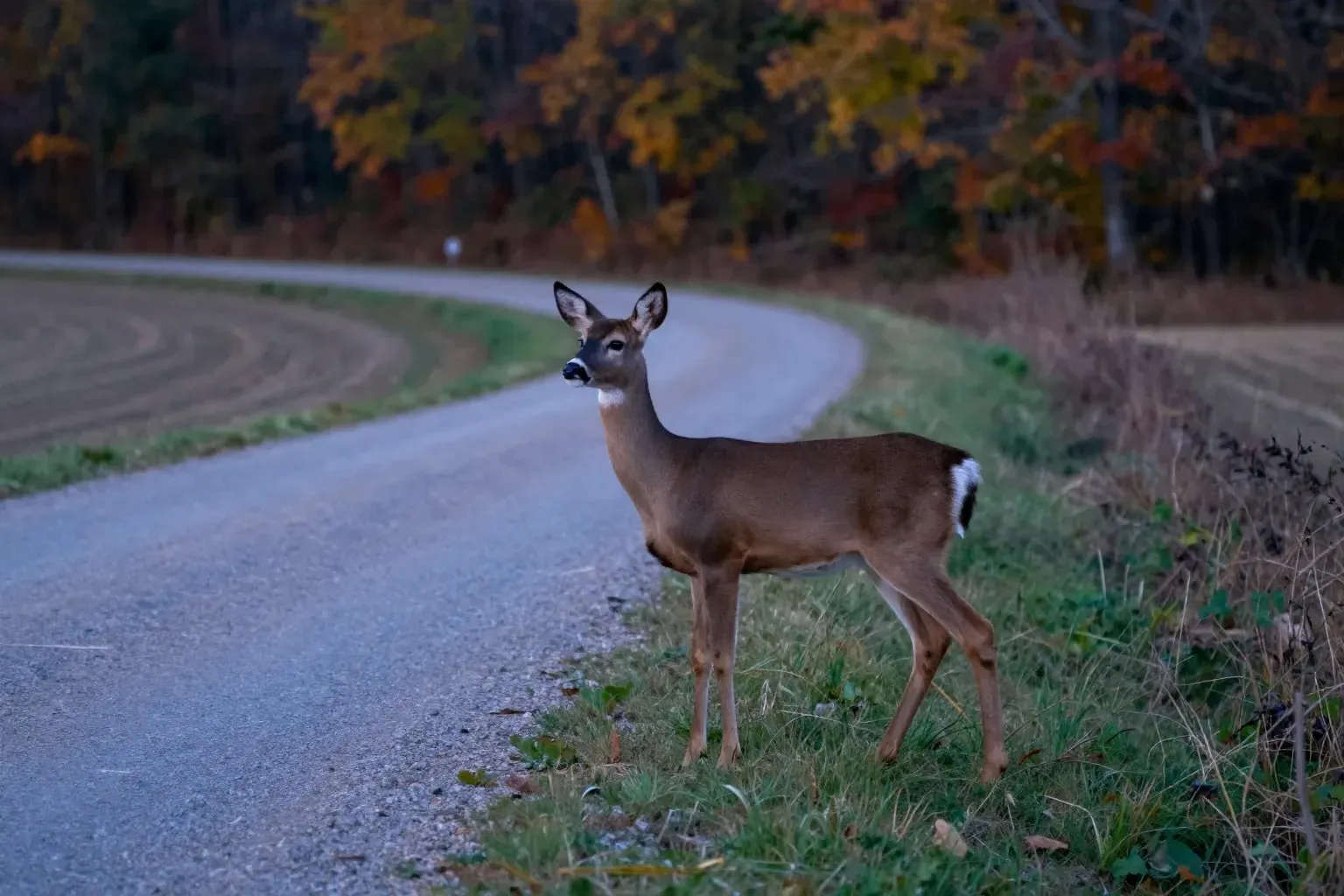
If your truck hits a deer, the damage to your vehicle is generally covered under comprehensive, not collision. If you swerve to miss the deer and hit a tree, a fence post or the ditch instead, that damage is usually a collision claim, with its own deductible. And if you carry only liability coverage, neither applies, so the repair bill is yours.
How common wildlife crashes are
Anyone who drives two-lane roads at dawn already knows the answer: common. The Insurance Information Institute (Triple-I) (opens in a new tab) publishes insurer claims estimates showing roughly 1.65 million animal collision claims nationwide from July 2025 through June 2026, slightly fewer than the year before. Deer are the most frequently struck animal, Pennsylvania had the most estimated claims, and West Virginia drivers had the highest odds of hitting an animal.
Triple-I also points out that October through December, the heart of deer season, brings the most deer-vehicle collisions. That’s rut, hunting pressure and shorter days, with commutes falling right in the dark hours.
Most of these crashes damage vehicles rather than people, but not all. The Insurance Institute for Highway Safety (opens in a new tab) counted 210 deaths in crashes with animals in 2024. Interestingly, those deaths clustered in July through September, with April through June close behind, even though collisions peak in fall. The takeaway for rural drivers: wildlife is a year-round risk, and summer driving deserves as much care as November.
Comprehensive vs. collision, in plain terms
Triple-I explains the split (opens in a new tab) this way:
- Collision pays to repair your vehicle after you hit an object, such as a pole, guardrail or mailbox, or after a rollover. It also covers pothole damage.
- Comprehensive pays for damage from causes other than a collision: theft, fire, vandalism, falling objects, broken windshields, storms, and hitting an animal.
Both come with deductibles, and many people carry a different deductible on each. That’s why the “what did you hit?” question matters so much after a wildlife crash.
Which coverage applies? Common scenarios
| What happened | Usually handled under | Notes |
|---|---|---|
| You hit a deer crossing the road | Comprehensive | Your comprehensive deductible applies |
| A deer runs into the side of your parked or moving truck | Comprehensive | Photos of fur or damage pattern help |
| You swerve to miss a deer and hit a tree or fence | Collision | Collision deductible applies; that’s one reason not to swerve |
| You swerve and roll into the ditch | Collision | Rollovers are collision losses |
| You hit a deer and then slide into another car | Often both, depending on the policy and the facts | Liability may also apply to the other driver’s damage |
| You hit a cow or horse that got out | Generally comprehensive for your vehicle | The animal’s owner may face questions depending on state fence and livestock laws |
| You carry liability only | No coverage for your own vehicle | Liability pays only for damage you cause to others |
| You or a passenger are hurt | Health insurance, plus MedPay or PIP if you carry it | Coverage depends on your state and policy |
Policy language governs, and claims adjusters look at the facts. Use the table as a guide to the conversation, not a final answer.
What to do in the first hour
Triple-I’s deer-collision tips (opens in a new tab) include staying away from the injured animal, getting your vehicle off the road if you can, and calling the police. Here’s a fuller checklist for a gravel road at dusk:
- Stop safely, turn on hazards, and check everyone for injuries
- Move the vehicle off the road if it’s drivable and safe to do so
- Stay away from the animal, even if it appears dead; an injured deer can kick hard
- Call the police or sheriff if anyone is hurt, the vehicle or animal blocks traffic, or your state requires a report
- Photograph the vehicle, the road, the animal if visible, and any skid marks
- Note the location by mile marker, road name or GPS pin
- Don’t drive if lights, the radiator or the hood latch are damaged
- Call your insurer or agent and ask whether to file under comprehensive or collision
- Ask about towing if the truck isn’t safe to drive
If help is far off, read Towing and Roadside Coverage When Help Is Far Away before deer season, not after.
Lowering your risk on rural roads
Triple-I’s safety guidance lines up with what longtime country drivers already practice:
- Watch dawn and dusk closely. Risk runs highest from sunset to around midnight and in the hours near sunrise.
- Expect more than one. Deer rarely travel alone. If one crosses, slow down for the others.
- Use high beams on dark roads when there’s no oncoming traffic, so you can pick up eye shine sooner.
- Brake firmly and stay in your lane. Swerving causes many of the worst outcomes.
- Be extra careful where fields meet woods. Edges of farmland and timber are classic crossing spots.
- Buckle up. Triple-I notes that most people hurt in deer crashes weren’t wearing seat belts.
- Don’t count on gadgets. Deer whistles and similar devices haven’t been shown to reduce collisions.
Filing the claim: what helps it go smoothly
Adjusters want to understand what touched your vehicle and in what order. A few habits make that easier:
- Report promptly. Call while the details are fresh, and mention if the truck isn’t drivable so towing and rental options can be discussed.
- Keep evidence. Hair or blood on the bumper, a broken grille, and a photo of the animal on the shoulder all support a comprehensive claim.
- Be precise about a swerve. If you hit the deer first and then the ditch, say so. If you only hit the ditch, say that too. The sequence decides which coverage applies.
- Ask about repair shops. Modern trucks often need sensors and cameras recalibrated after front-end work, so ask whether the shop can handle it.
Should you carry comprehensive on every vehicle?
For many rural households, comprehensive is the coverage that pays most often: deer, hail, gravel chips that turn into cracked windshields, and falling branches. If your truck is financed or leased, your lender will likely require it.
For an older farm truck worth little, it can be reasonable to drop physical damage coverage altogether. Triple-I suggests comparing what the coverage costs with what the vehicle is worth. Our guide to older vehicles and when to drop collision coverage walks through that math. Just remember that dropping comprehensive means a deer strike comes out of your pocket.
Deductible choice matters too. A higher comprehensive deductible lowers your premium, but repairing deer damage on a modern truck with sensors and LED headlights can be expensive. Pick a deductible you could pay the week after a crash. Windshield damage is related; see Gravel Roads and Windshield Glass Claims, and Winter Driving and Claims for ice-season scenarios.
How Pinemark helps
Our licensed agents review your truck and auto coverage with wildlife in mind: comprehensive and collision deductibles, towing, rental reimbursement, and medical payments coverage where it’s offered. For trucks used on the farm or in a trade, our Farm, Ranch & Business-Use Vehicles service makes sure the policy matches how the truck is used, so a deer claim doesn’t turn into a coverage dispute.
Next step
Before the fall rut, take five minutes to check your declarations page for comprehensive coverage and deductibles. If anything looks unclear, book a free consultation with a licensed agent and we’ll walk through it with you.
Frequently asked questions
Is hitting a deer covered by comprehensive or collision?
Hitting an animal is generally covered under comprehensive, according to the Insurance Information Institute. If you swerve to miss the deer and hit a tree, fence or another car instead, that damage is usually handled under collision.
Does liability-only insurance cover hitting a deer?
No. Liability coverage pays for damage and injuries you cause to others. Damage to your own vehicle from a deer requires comprehensive coverage.
Will a deer claim raise my rates?
Comprehensive claims for animal strikes are typically treated differently from at-fault crashes, but each insurer and state has its own rating rules. Ask your agent how your insurer handles them before you file a small claim.
Should I swerve to avoid a deer?
Safety groups advise against it. The Insurance Information Institute recommends braking firmly and staying in your lane, since swerving can send you into oncoming traffic or off the road.
What should I do right after hitting a deer?
Get to a safe spot if you can, turn on your hazard lights, and call the police if anyone is hurt, the vehicle is blocking the road, or your state requires a report. Don't approach the injured animal. Take photos and contact your insurer or agent.
Sources
- Insurance Information Institute: What is covered by collision and comprehensive auto insurance? (opens in a new tab)
- Insurance Information Institute: Avoid a deer-car collision (opens in a new tab)
- Insurance Information Institute: Facts + Statistics, deer vehicle collisions (opens in a new tab)
- IIHS: Fatality Facts 2024, collisions with fixed objects and animals (opens in a new tab)